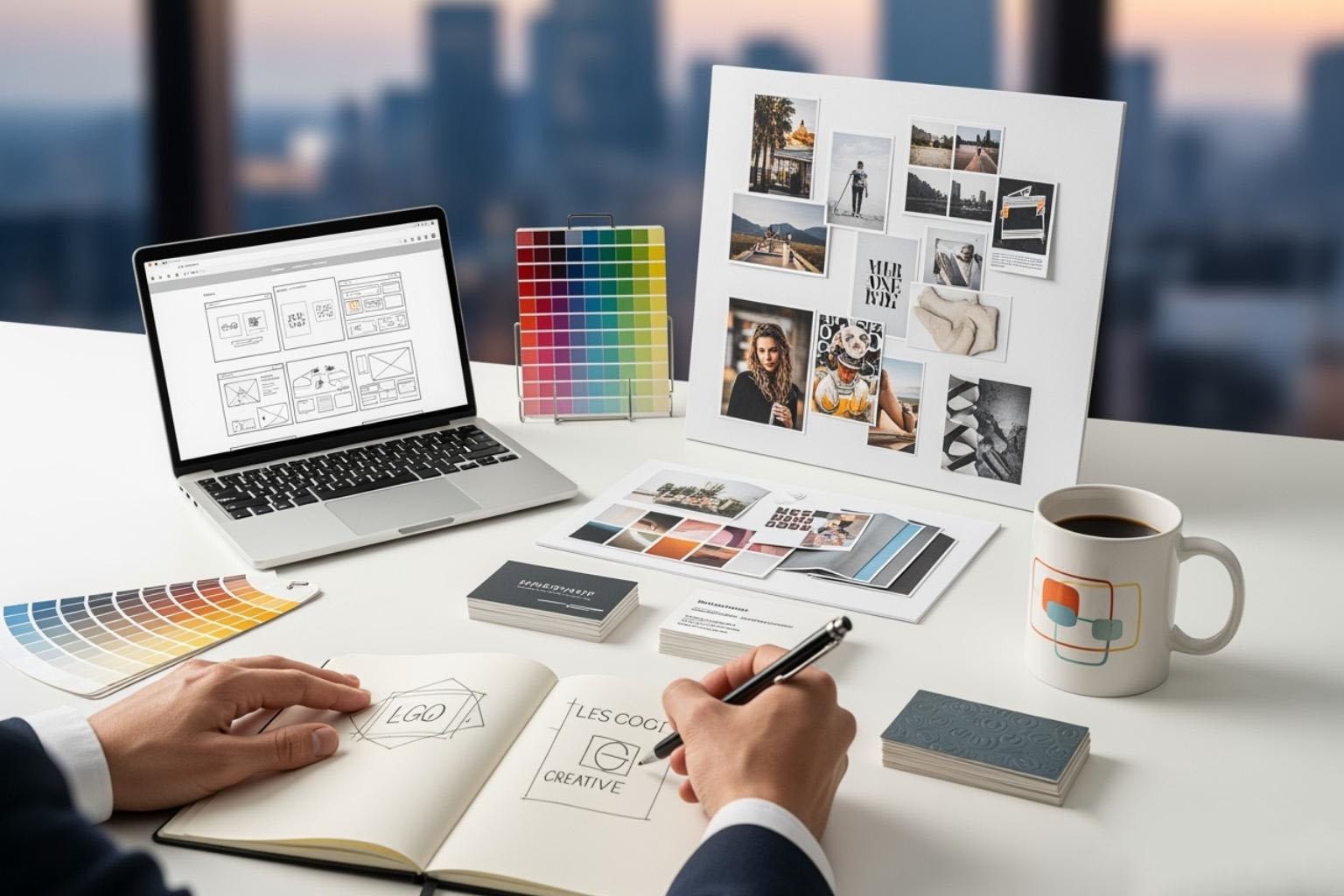
Branding for Manchester Startups: Where to Begin
Starting a business in Manchester is an exciting opportunity. Whether you are launching a technology company, a creative agency, an e-commerce store or a local service business, establishing a recognisable brand can help you communicate your value and attract the right customers.
However, branding involves much more than choosing a logo or picking attractive colours. It requires a clear understanding of your audience, your business values, your competitive advantage and the experience you want customers to associate with your company.
For founders exploring startup branding Manchester, the best approach is to build a strong foundation before investing heavily in marketing.
In this guide, LogoStellar explains how to develop a professional startup brand, which elements to prioritise and how to create a consistent identity that can grow with your business.
Why Branding Matters for Manchester Startups
Manchester has an active business and technology community, supported by organisations such as Manchester Digital, which provides startup resources, programmes and networking opportunities. You can explore its startup resources and community to learn more about the local ecosystem.
In a competitive market, customers need a reason to remember your business rather than another company offering a similar service.
Effective branding helps you:
- Communicate what your business does and who it serves.
- Create a professional first impression.
- Differentiate your startup from competitors.
- Build recognition across your website, social media and marketing materials.
- Maintain a consistent message as your business grows.
- Support customer confidence by presenting your business clearly and professionally.
A strong brand cannot guarantee sales, but it can make your business easier to recognise, understand and evaluate.
1. Define Your Brand Strategy Before Designing a Logo
The first step in branding for Manchester startups is understanding what your business represents.
Before commissioning a logo or designing a website, answer five important questions:
Who is your target audience?
Identify the people or businesses most likely to need your products or services. Consider their challenges, priorities, budgets and buying habits.
What problem do you solve?
Explain the specific problem your startup addresses. A clear value proposition is more useful than a broad statement about being innovative or customer-focused.
What makes your business different?
Consider your specialist knowledge, service approach, product features, pricing model or customer experience. Focus on genuine differences that matter to your audience.
What should customers associate with your brand?
Decide whether your startup should feel approachable, premium, innovative, dependable, creative or technically advanced.
What do you want to achieve?
Your branding should support practical business objectives, such as generating enquiries, attracting investors, improving product recognition or increasing online sales.
Write your answers in a short brand strategy document. This will give you a clear direction for future design and marketing decisions.
2. Research Your Manchester Competitors
Understanding your competitors helps you identify opportunities to position your startup more effectively.
Look at businesses serving similar customers in Manchester and across the wider UK market. Review their websites, logos, messaging, social media profiles, service offerings and customer reviews.
Create a simple competitor analysis with three questions:
- What do competitors communicate particularly well?
- Which visual styles and messages appear repeatedly?
- What could your startup communicate differently or more clearly?
For example, if several competitors use similar corporate colours and formal messaging, a more approachable visual identity may help your business stand apart—provided that approach suits your audience.
The goal is not to copy successful businesses. It is to identify an authentic position for your own brand.
3. Create a Professional Logo and Visual Identity
Your logo is often one of the first visual elements people notice, but it should work as part of a wider identity system.
Professional startup branding typically includes:
- Primary logo: Your main brand mark for websites and marketing materials.
- Secondary logo: An alternative layout for different spaces.
- Brand icon: A simplified symbol for favicons, social profiles and small applications.
- Colour palette: A defined set of colours for backgrounds, text, buttons and highlights.
- Typography: Fonts for headings, body copy and supporting information.
- Graphic elements: Supporting shapes, illustrations, patterns or imagery.
- Brand guidelines: Instructions for using these elements consistently.
When choosing a visual direction, consider your industry and audience rather than following every design trend.
A technology startup might benefit from a clean, contemporary identity, while a handmade product business could require a more personal and expressive style.
Your visual identity should remain recognisable on a mobile screen, business card, presentation, packaging and website.
Explore LogoStellar’s logo design and branding products to see available design-related services and packages.
4. Choose Brand Colours and Typography Carefully
Colour and typography influence the overall character of your business.
Instead of selecting colours simply because they look attractive, consider what your audience expects and how the colours will function across digital and printed materials.
A practical startup colour system includes:
- One primary brand colour.
- One or two supporting colours.
- Neutral colours for backgrounds and text.
- A contrasting accent colour for important actions.
Typography deserves similar attention. Choose fonts that reflect your brand personality while remaining readable across devices.
For example, a B2B software company may benefit from a clean and straightforward typeface, while a creative lifestyle brand may use a more distinctive display font alongside readable body text.
Always check colour contrast, font sizes and readability, particularly on mobile devices.
5. Develop a Consistent Brand Voice
Your brand is not only what customers see. It is also what they read and hear.
Brand voice determines how your startup communicates through website copy, advertisements, social media captions, emails and customer support.
Choose three or four characteristics that describe your communication style. These might include:
- Friendly and approachable.
- Professional and knowledgeable.
- Bold and innovative.
- Clear and reassuring.
Then create simple writing guidelines.
For example, if your startup offers services to small businesses, you might choose straightforward language that explains benefits without relying on complicated technical terms.
Consistency matters more than using impressive words. Customers should be able to recognise your communication style across different platforms.
6. Build a Website That Reflects Your Brand
Your website is often a central part of your startup’s digital presence. It should communicate your value quickly and make it easy for visitors to take the next step.
A professional startup website should include:
- A clear headline explaining what you offer.
- A concise introduction to your business.
- Information about your products or services.
- Evidence that supports your credibility, such as relevant work samples or genuine testimonials.
- Clear calls to action.
- Contact information or a simple enquiry process.
- Mobile-friendly layouts and accessible design.
- Search-engine-friendly page titles, descriptions and content.
Your website should use the same logo, colour palette, typography and messaging as your other brand materials.
If you sell products online, ensure the branding carries through to product pages, checkout screens, packaging and post-purchase emails.
Explore LogoStellar’s startup website design and development packages for options that may support your digital launch.
7. Establish Your Social Media Branding
Social media can help new businesses introduce their brand, share useful information and develop relationships with potential customers.
However, your profiles should look like parts of the same business rather than separate projects.
Start with the platforms your target customers actually use. Depending on your startup, these might include LinkedIn, Instagram, Facebook or TikTok.
Prepare a small set of reusable branded templates for:
- Educational posts.
- Product or service announcements.
- Customer questions and answers.
- Company updates.
- Case studies and project highlights.
- Promotional campaigns.
Use consistent colours, typography, logo placement and writing style. Keep important text readable on smaller screens.
You can also explore LogoStellar’s social media package for startups and new businesses if you need support creating a consistent visual presence.
8. Protect Your Brand Name Before Investing Further
Choosing a name is an important part of launching a startup. Before spending heavily on branding, check whether the name is already being used or could conflict with an existing business or trade mark.
Useful checks include:
- Searching the web for businesses with similar names.
- Checking domain name availability.
- Reviewing relevant social media usernames.
- Searching the UK Intellectual Property Office trade mark database.
The UK government provides an official trade mark search service. You can also read its guide to registering a trade mark to understand the process and protection available.
A domain name or company registration alone does not necessarily mean that a brand name is free from trade mark conflicts. If you identify a potentially conflicting name, seek appropriate professional advice before proceeding.
9. Set a Realistic Startup Branding Budget
You do not need to commission every possible branding asset on day one. The important thing is to invest in the elements that support your immediate business goals.
A practical way to prioritise your budget is to divide the work into three stages.
Stage one: Essential launch assets
- Brand positioning and messaging.
- Business name checks.
- A professional logo.
- Core colours and typography.
- A basic brand style guide.
- A functional website or landing page.
Stage two: Marketing assets
- Social media templates.
- Sales presentations.
- Email signatures.
- Promotional graphics.
- Product or service brochures.
Stage three: Growth assets
- Expanded brand guidelines.
- Packaging and printed materials.
- Campaign-specific creative.
- Additional website pages and conversion improvements.
- New assets for partnerships or expansion into other markets.
The cost of branding depends on the scope, complexity, deliverables and experience of the designer or agency. Ask for a written scope that specifies what you will receive, how many revisions are included and whether editable source files are supplied.
This approach helps you avoid spending on assets that are not yet necessary while ensuring your initial identity is professional and usable.
10. Measure and Improve Your Brand Over Time
Branding should evolve alongside your business, but changes should be based on evidence rather than personal preference alone.
Once your startup launches, monitor indicators such as:
- Website enquiries and conversion rates.
- Branded search activity.
- Engagement with branded content.
- Customer feedback and recurring questions.
- Recognition of your business in sales conversations.
- Performance of landing pages and advertising campaigns.
For example, if visitors reach your website but do not understand your service, the issue may be unclear messaging rather than your logo.
If customers respond positively to your identity but struggle to find information, improving your website structure may be more useful than redesigning the entire brand.
Review your branding periodically and make changes where there is a clear reason to do so.
Common Startup Branding Mistakes to Avoid
New businesses can waste time and money by making branding decisions without a clear strategy.
Avoid these common mistakes:
Designing before defining your audience: A visually attractive brand may still fail to communicate the right message.
Copying competitors: Similar branding can make your startup harder to distinguish and may weaken its individuality.
Following short-lived trends: Design trends can be useful inspiration, but your identity should remain relevant as your business develops.
Using inconsistent visuals: Different logos, colours and fonts across platforms can make the business appear disorganised.
Ignoring the customer experience: Branding should extend beyond graphics to the quality and consistency of your interactions with customers.
Investing in too many assets too early: Prioritise the essentials, then expand your brand toolkit as your needs become clearer.
Final Thoughts: Start Building Your Manchester Startup Brand Today
Building a successful startup brand does not mean creating the most complicated logo or spending the largest marketing budget. It means making deliberate decisions about your audience, positioning, messaging and visual identity.
For founders researching startup branding Manchester, a sensible starting point is to define what makes your business valuable, understand the competitive landscape, develop a consistent identity and create a website that communicates your offer clearly.
As your startup grows, your branding can expand to support new products, customers and opportunities.
At LogoStellar, the aim is to help businesses explore practical design and digital solutions that support their next stage of growth.
Ready to build your startup brand? Explore LogoStellar’s design and branding offerings and identify the services that best fit your business goals.
Start with a clear strategy, create a recognisable identity and build a brand that is ready to grow with your Manchester startup.